
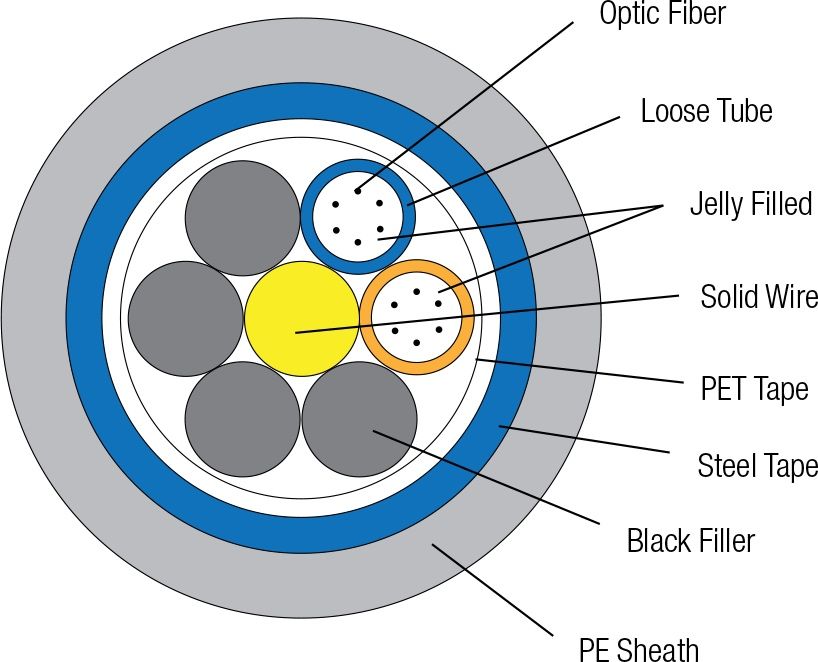
Which optical parameters defines fiber optic cable is good or bad?
The key optical parameters that define whether a fiber optic cable is considered good or bad include:
1.Attenuation: This measures the reduction in signal strength or light intensity over the fiber length and is expressed in decibels. Lower attenuation means less signal loss and better cable quality.
2. Dispersion: Dispersion, including chromatic and modal dispersion, affects signal broadening and quality over distance. Low dispersion is desirable for maintaining signal integrity.
3.Mode-Field Diameter (MFD): Indicates how effectively the fiber transmits light and its resistance to bending losses. Proper MFD reduces losses due to bending and slicing.
4.Cutoff Wavelength: Defines the wavelength above which the fiber operates in single-mode, important for signal quality.
5.Bandwidth: Reflects the data transmission capacity of the fiber, with higher bandwidth meaning the fiber can support higher data rates.
6.Environmental Resistance: Includes cable’s ability to withstand microbending, temperature, and mechanical stresses without degrading performance.
7.Connector Quality and End-Face Condition: Good polishing and connectorization reduce insertion loss and back reflection, improving overall performance.
These parameters collectively determine the performance quality, signal transmission efficiency, and reliability of fiber optic cables


HOOHA CO., LTD
Your reliable supplier of
Power cable making machine
LAN cable making machine
Optical fiber cable making machine
